Product Details
Бројеви у српском фолклору Print Books Price: $  Availability: Inquire 

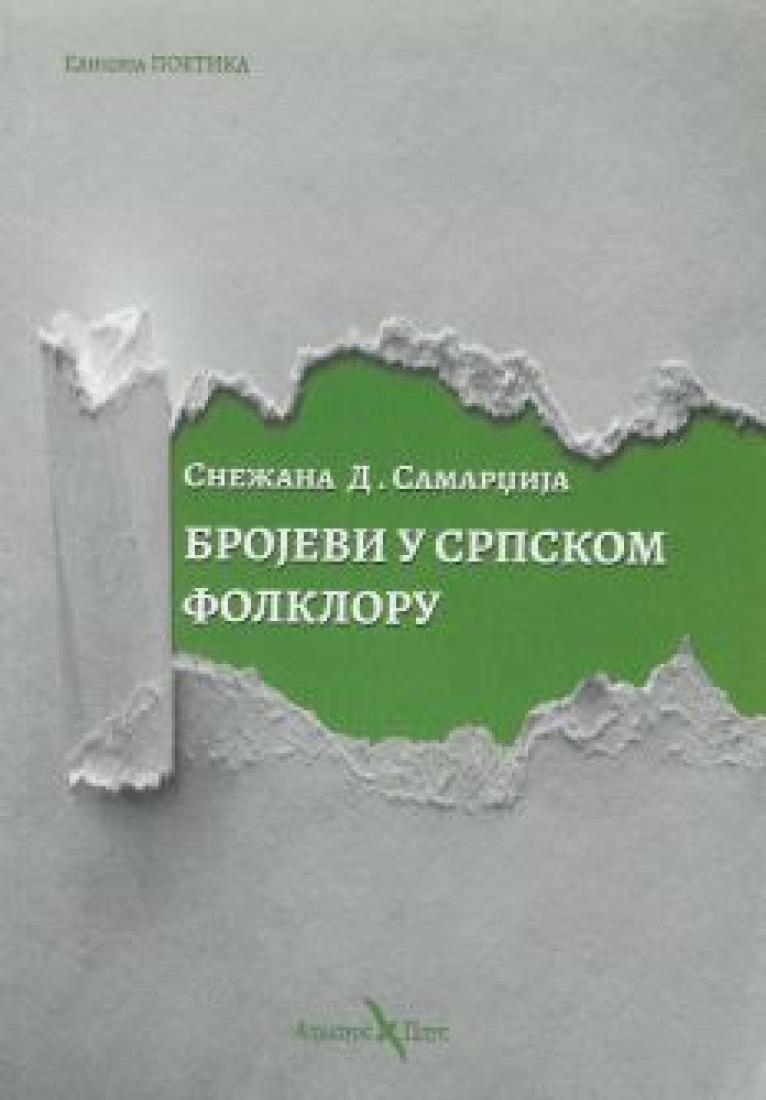
Brojevi u srpskom folkloru  Numbers in Serbian Folklore 

Бројеви у српском фолклору 
  • Product Details

    Product #
    Author(s)
    Samardzija, Snezana D.
    City
    Beograd 
    Country
    Serbia 
    Language
    Serbian (Cyrillic) 
    ISBN
    9788660813185 
    Date of Publication
    2020 
    Publisher
    Cover Type
    Soft cover 
    Pages
    167 
    Subject
    Folklore / Mythology
     
  • Product Details in Original Language

  • Description

    Numbers in Serbian Folklore After a series of studies and monographs in which she dealt with the morphological and poetic features of oral literary forms, but also the connections between oral and so-called. new Serbian literature, and those studies and monographs brought her to the very top of Serbian literary science, Snezana Samardzija put numbers in Serbian folklore at the center of her interest, starting from the belief that "thanks to experience based on observation and analogies through" events " inherent in natural processes can be expressed by numbers ", primarily because" differently placed numerical sequences are an essential basis of the mythological complex and ritual-magical practice ". This means that she always places the use of numbers in, for example, epic poems or fairy tales in a broader context, always trying to see numbers as elements of a complex form of symbolic representation of the world. Seeing, in a word, in numbers an expressive means in everything equally equal to other expressive elements of folklore, Snežana Samardžija tried to connect their poetic role with the need to quantify the phenomena of the world through which the hero of oral literature moves and to emphasize deeper symbolic in that quantification. properties. Since numbers are also a part of what is always in oral literature and since their role is so complex that not a small symbolic potential is connected to numbers, Snezana Samardzija examines in great detail the role of some numbers (three, four, seven, nine, twelve), all in the desire to show how the old cultural layers are connected with what Christianity has brought and the symbolic interpretation of numbers that it implies. Although she mainly starts from oral literature and the role of numbers in the world of forms of that literature, Snežana Samardžija never loses sight of the fact that oral literature is only a part of a folklore-mythological pattern of world interpretation and therefore her study will be of great use to those who they deal with the spectrum of issues that lead from literature to other areas of culture.